


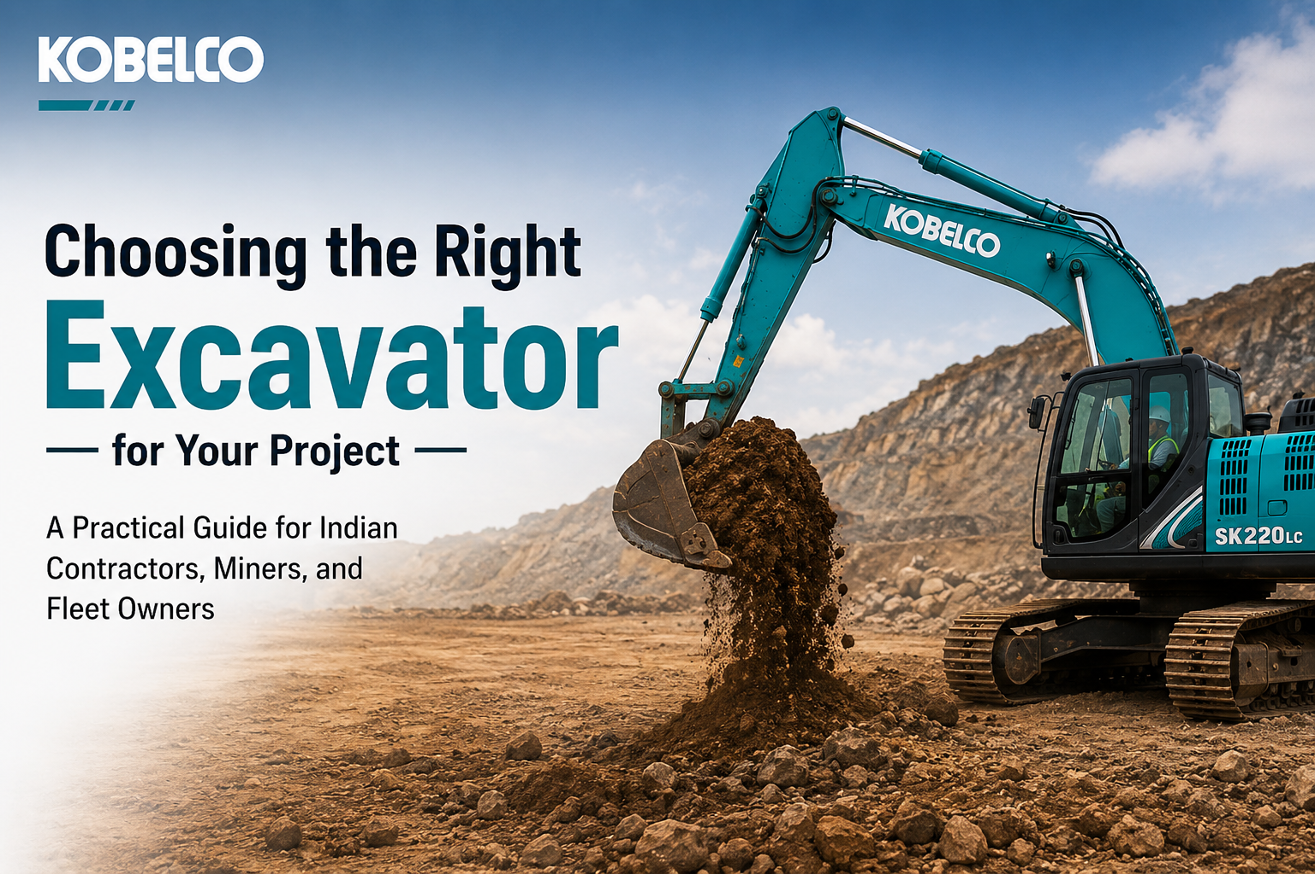
If you go to any construction site in India at present — whether it is a highway near Nagpur, a quarry near Jodhpur, or an infrastructure project near Pune — you will notice one thing. The excavator stationed at the site is not merely an excavator but has been chosen based on certain criteria like tonnage, fuel efficiency, and sturdiness that are ideal for that particular construction site. If one gets the combination wrong, then he or she suffers daily as wear costs more, fuel bills rise, and there are breakdowns at odd times.
This is the fundamental issue at the heart of choosing an excavator for mining, road construction, demolition, or any other job: which equipment actually fits the work at hand? It’s not a question of brand — it’s a question of which machine performs best for your specific operation. This is a conversation Kobelco India has with its clients all the time, because machines that look impressive on paper but aren’t suited to the actual working conditions end up costing more than they save.
Start With the Job, Not the Brochure
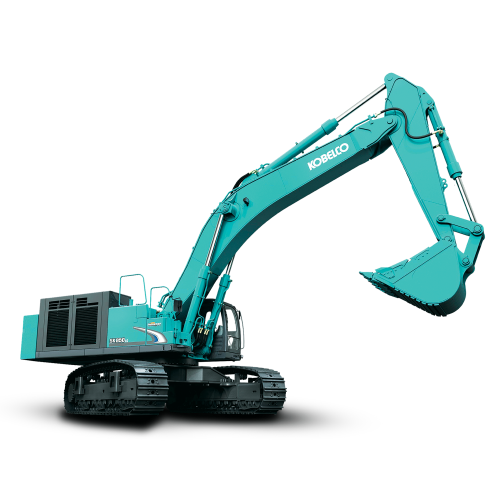
A heavy excavator designed to work at a mining site, for example, cannot be described in terms of sheer size alone. It is characterized by its ability to withstand tough operating conditions — hard rock, dense ore, and aggressive overburden with each bucketful. In the harsh conditions of Indian mining sites, whether coal or iron ore areas, a construction excavator will not survive more than a few months.
Getting Tonnage Right for Mining Operations
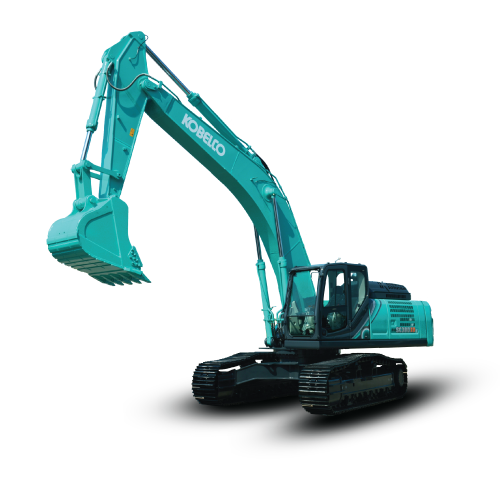
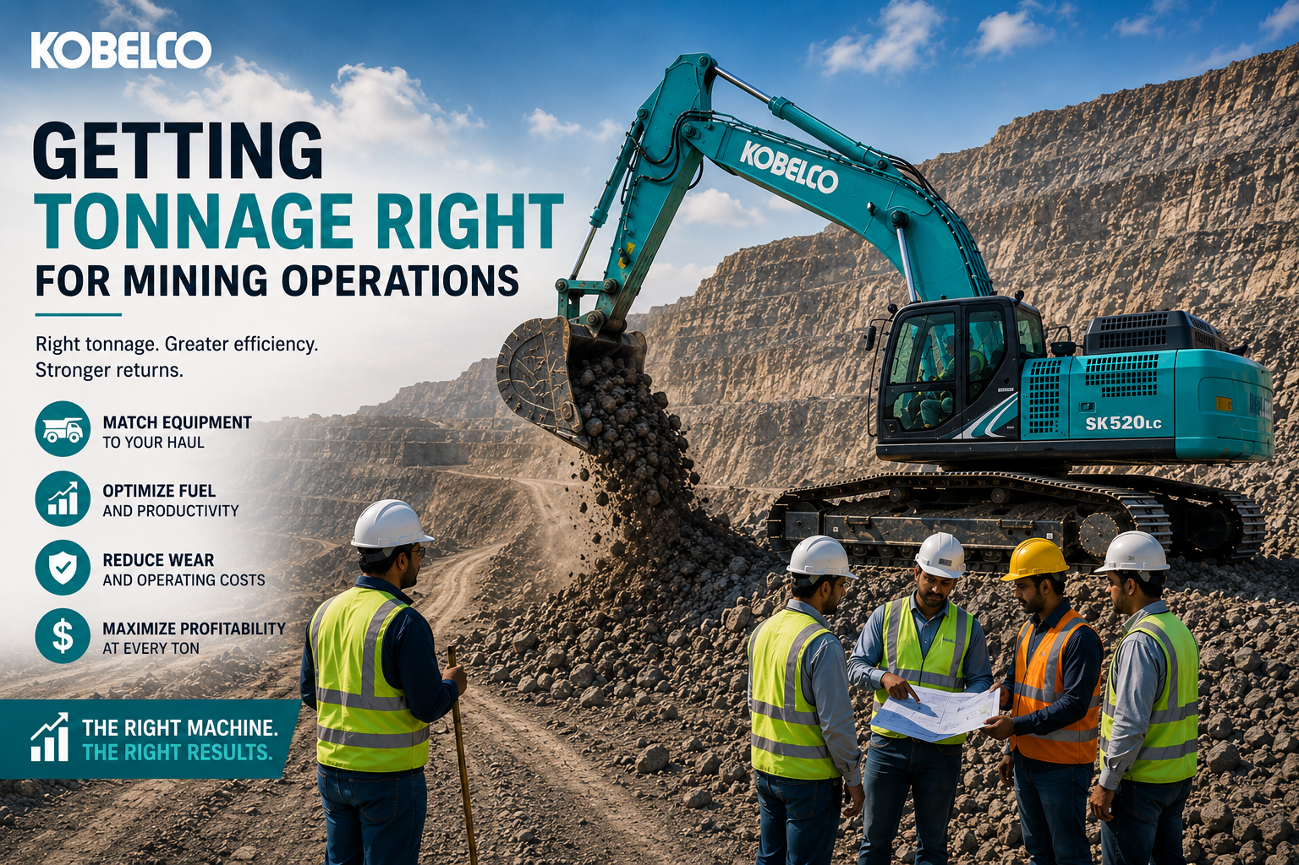
Tonnage class is an aspect of mining where buyers usually either save themselves years of inconvenience or run into a problem at every turn. A 50-ton mining excavator is particularly convenient for mid-range scale mining operations, as it is large enough to effectively move substantial volumes of material but not so heavy that transportation and logistics become an issue. As a result, this type of excavator is usually ideal for mines that have not yet reached maximum production potential.
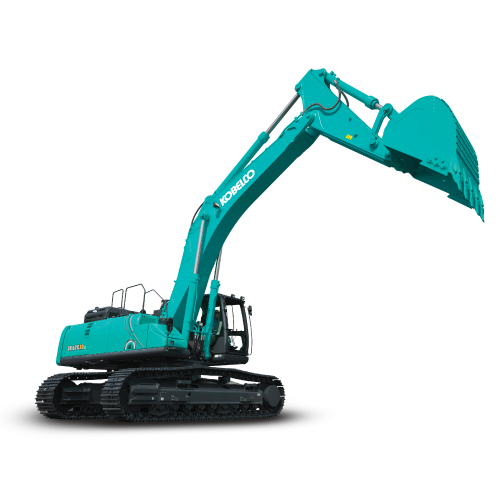
When the scale of operations increases, an 80-ton mining excavator is a better option. At this stage, it is usually paired with large dump trucks to ensure proper timing for loading operations. In a situation where every scoop needs to work toward a particular tonnage target, even the smallest inefficiency can have a huge impact on the final operating results.
Fuel Efficiency: The Cost That Never Stops Adding Up
If there’s one thing that comes up in almost every conversation with a fleet owner in India, it’s fuel. A fuel-efficient excavator in India isn’t a marketing buzzword — it’s a genuine line item that determines whether a project stays profitable or quietly bleeds margin. An excavator running eight to ten hours a day, six days a week, burns through diesel constantly, and even a modest difference of a litre or two per hour compounds into a significant gap across a year of operation.
The difference isn’t just related to the size of the engine, but also to the interaction of the hydraulic system, the engine, and the controls. A properly designed hydraulic pump and valve configuration consumes less energy during digging and swinging operations. ECO mode and power mode options let the operator adjust the engine’s output according to the task, rather than running it at high speed all the time regardless of the load on the machine. Auto-idling also prevents fuel wastage during waiting periods. Kobelco India’s excavators are built on this principle, combining ECO mode operation with hydraulic systems that allow energy recovery during repetitive movements.
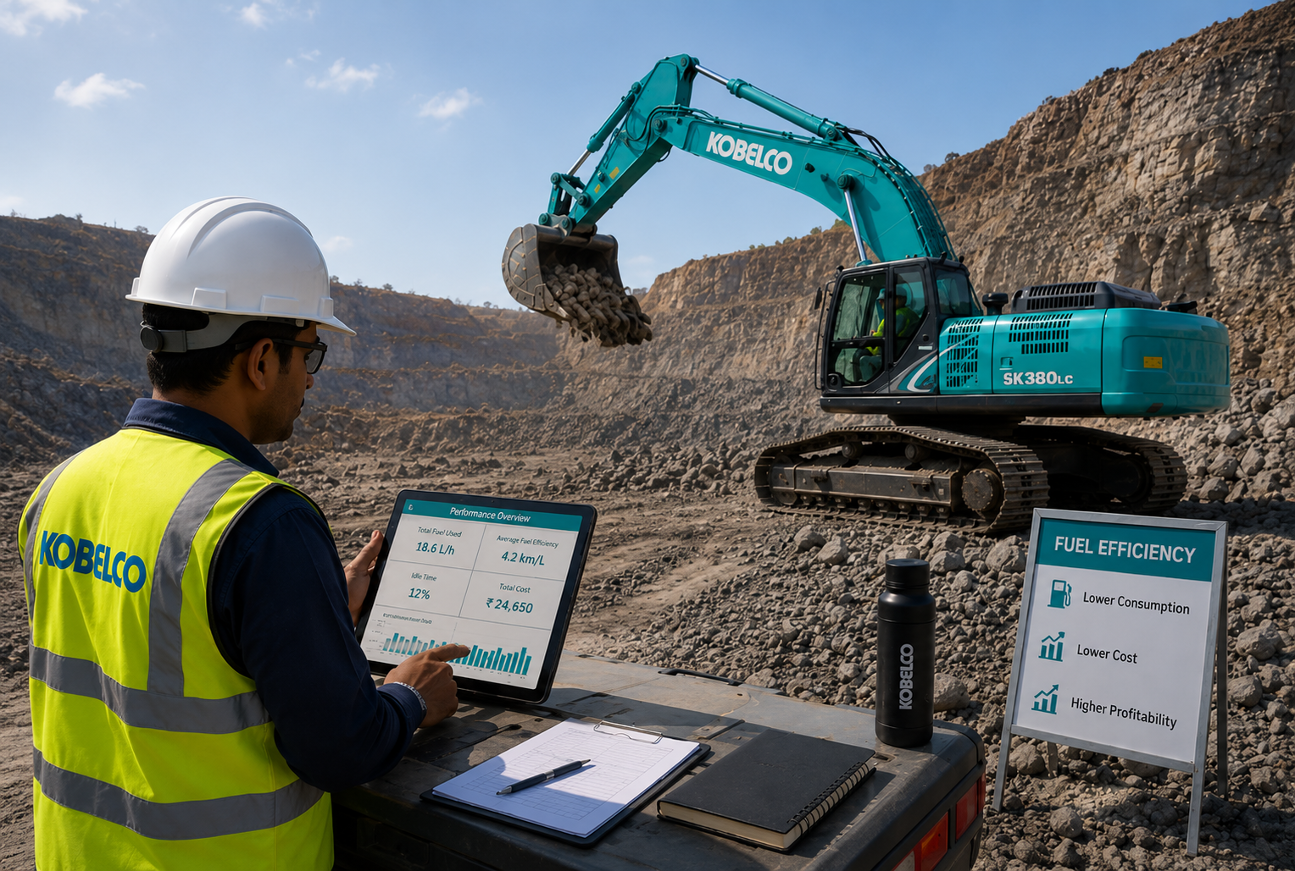
An excavator with low fuel consumption translates directly into a lower cost per cubic metre of material moved — which is exactly the number that determines whether a competitive tender was priced correctly. And here’s something buyers often miss: fuel efficiency doesn’t just save money while you’re operating the machine; it also protects resale value, since the next owner in the used equipment market knows precisely what running costs to expect.
One practical tip worth repeating: don’t take brochure fuel figures at face value. They’re often measured under controlled conditions that don’t reflect a real job site. Ask for field data, or better yet, request a demonstration on your own terrain before committing.
Road Construction: Versatility Over Long Distances
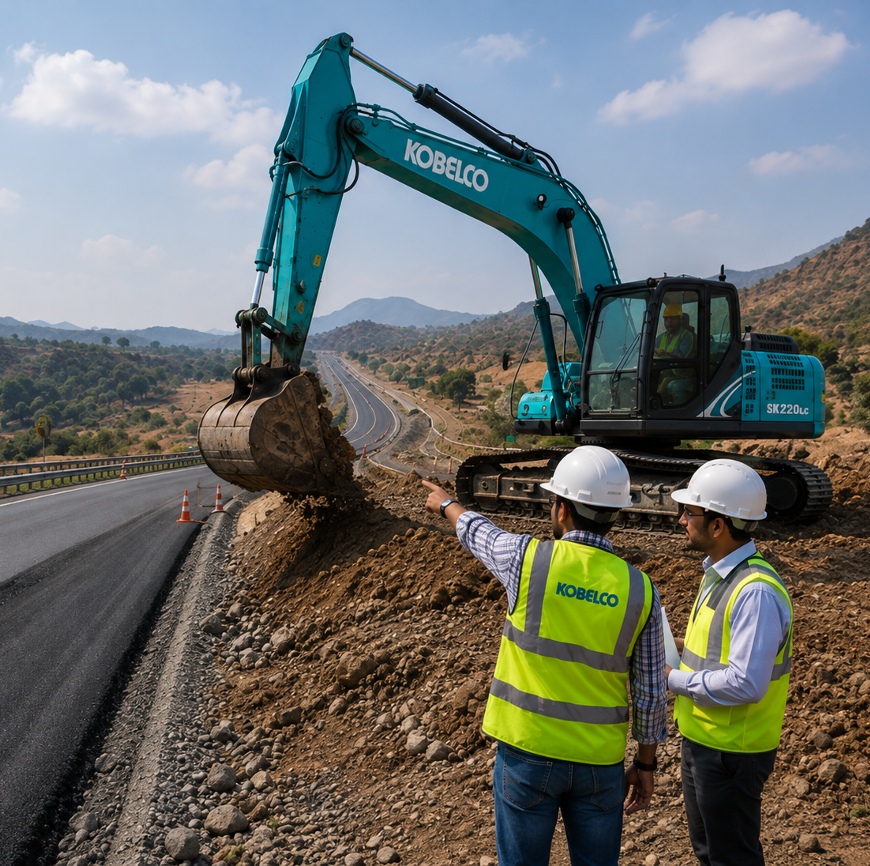
An excavator for road construction faces a different challenge altogether — not brutal abrasion like a mine, but constant task-switching spread across long, linear stretches of highway or rural road. One day it’s cutting and grading for alignment, the next it’s digging culverts, then trenching for utility lines running alongside the road, then loading trucks with excavated material.
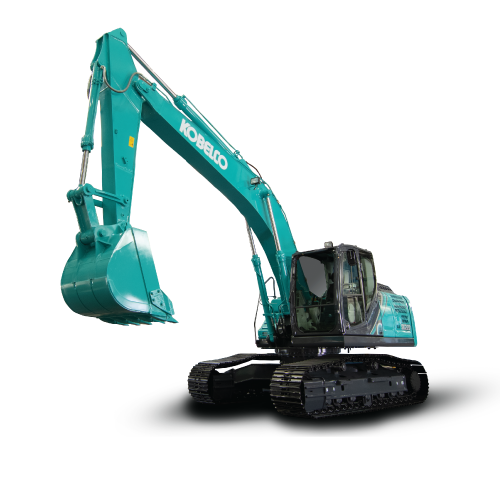
Most of this work in India is handled well by machines in the 20 to 35-ton range, offering enough reach and digging force for cut-and-fill sections while staying mobile enough to move efficiently along a spread-out site. Reliability matters more here than almost anywhere else, simply because road projects are geographically dispersed — a breakdown on a remote highway stretch can mean hours of waiting for support, unlike a compact urban site where help arrives quickly. Operator comfort also plays a bigger role than people give it credit for; long, repetitive shifts wear down focus, and a low-vibration, well-ventilated cab with good visibility keeps output steady across a full working day. Contractors running Kobelco India excavators on road projects often point to exactly this combination — dependable uptime paired with a comfortable cab — as the reason the machine keeps pace with tight highway deadlines.
Quarry Work: Built to Take a Beating
Few environments punish equipment like a quarry. An excavator for quarry operations deals with abrasive rock contact on every single cycle, constant dust exposure, and repeated shock loading from breaking and handling hard material. This is exactly why reinforced undercarriages, heavy-duty boom and arm construction, and enhanced filtration systems aren’t optional extras here — they’re the baseline requirement for a machine to survive years of continuous quarry use without excessive downtime.
Quarry operations also demand versatility through attachments, since a single machine might switch between digging, rock breaking, and material handling within the same shift. A hydraulic system with enough flow and pressure to power these different attachments efficiently, combined with quick-coupling capability, saves real time across a working day. It’s exactly this kind of durability-plus-versatility combination that Kobelco India engineers into its quarry-duty excavators, so operators aren’t choosing between toughness and flexibility.
Infrastructure Projects: One Machine, Many Jobs
India’s infrastructure boom — metro corridors, industrial parks, airport expansions — depends on an excavator for infrastructure projects that can do more than just one task well. Unlike a mining pit with repetitive digging, an infrastructure site might need the same machine to dig foundations in the morning, trench utility lines by midday, and handle material loading by afternoon. This constant task-switching makes attachment compatibility and hydraulic versatility genuinely important, not just a bonus feature. Because these sites often sit close to existing buildings, active roads, or underground utilities, responsive controls and strong operator visibility become essential for working safely in tighter, more sensitive environments. Kobelco India’s infrastructure-focused excavator models are built with exactly this kind of adaptability in mind, so the same machine can move confidently between foundation work, trenching, and material handling without losing precision.
Demolition and Tonnage: Matching Machine to Structure
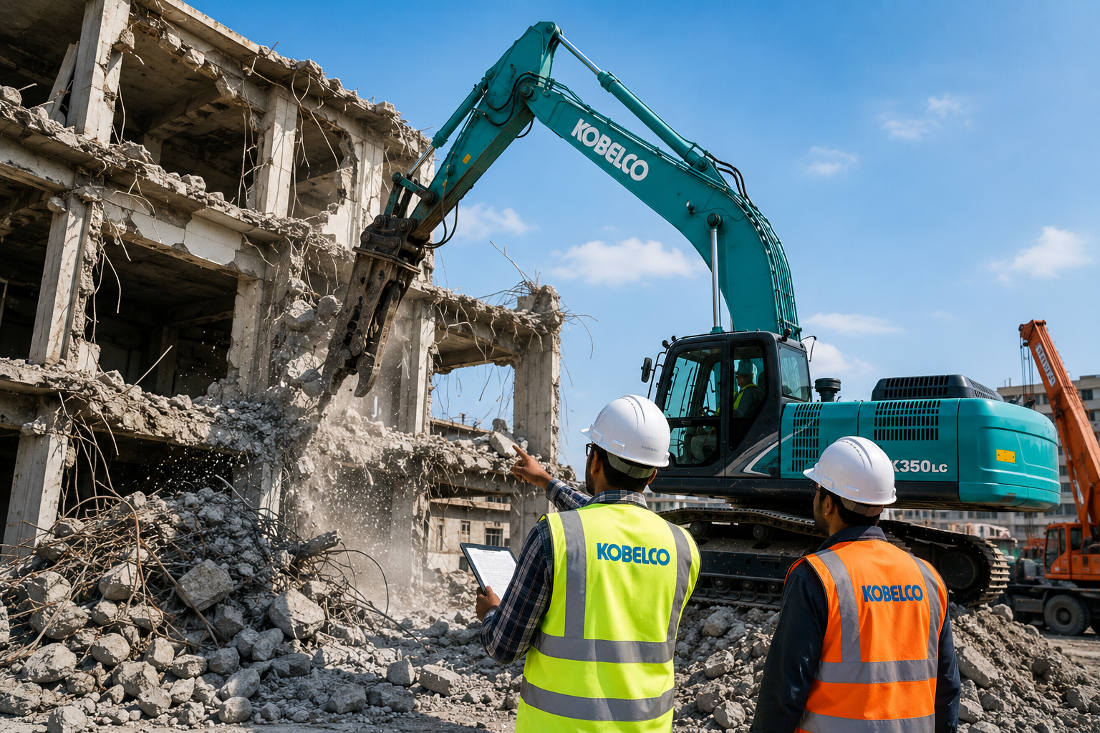
A demolition excavator in India needs a different kind of toughness — reinforced structures capable of powering breakers, pulverizers, and shears, plus certified cab protection for the unpredictable risks of a collapsing or partially damaged structure.
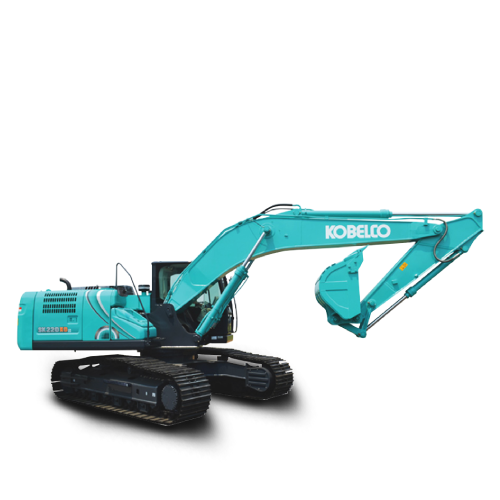
Here, tonnage decisions come down to site access and scale. A 20-ton excavator suits smaller, urban, or residential demolition jobs where space is tight, and manoeuvrability matters most. Step up to a 35-ton excavator, and you gain the reach and power needed for larger demolition projects, bigger foundation work, and heavier attachment handling. Neither choice should compromise on cab safety certification — it’s simply not a place to cut costs, given the unpredictable nature of demolition sites. Kobelco India offers both tonnage classes with this safety-first approach built in, so contractors don’t have to trade protection for manoeuvrability or power.
The Bottom Line
Before making a purchase decision, talk through your actual daily tonnage targets, terrain, and haul cycles with the team at Kobelco India or your nearest authorized dealer. That conversation, more than any brochure comparison, is what determines whether the machine you choose becomes a genuine asset or a recurring headache.