


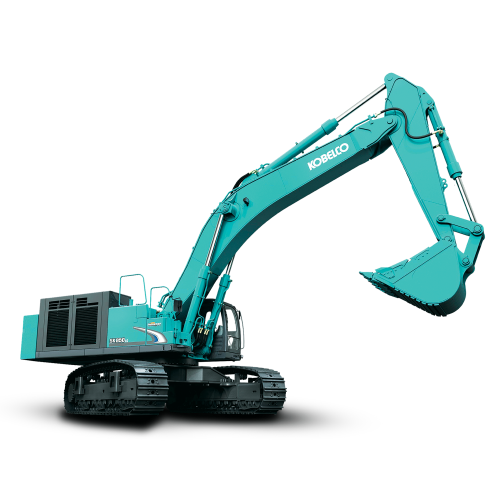
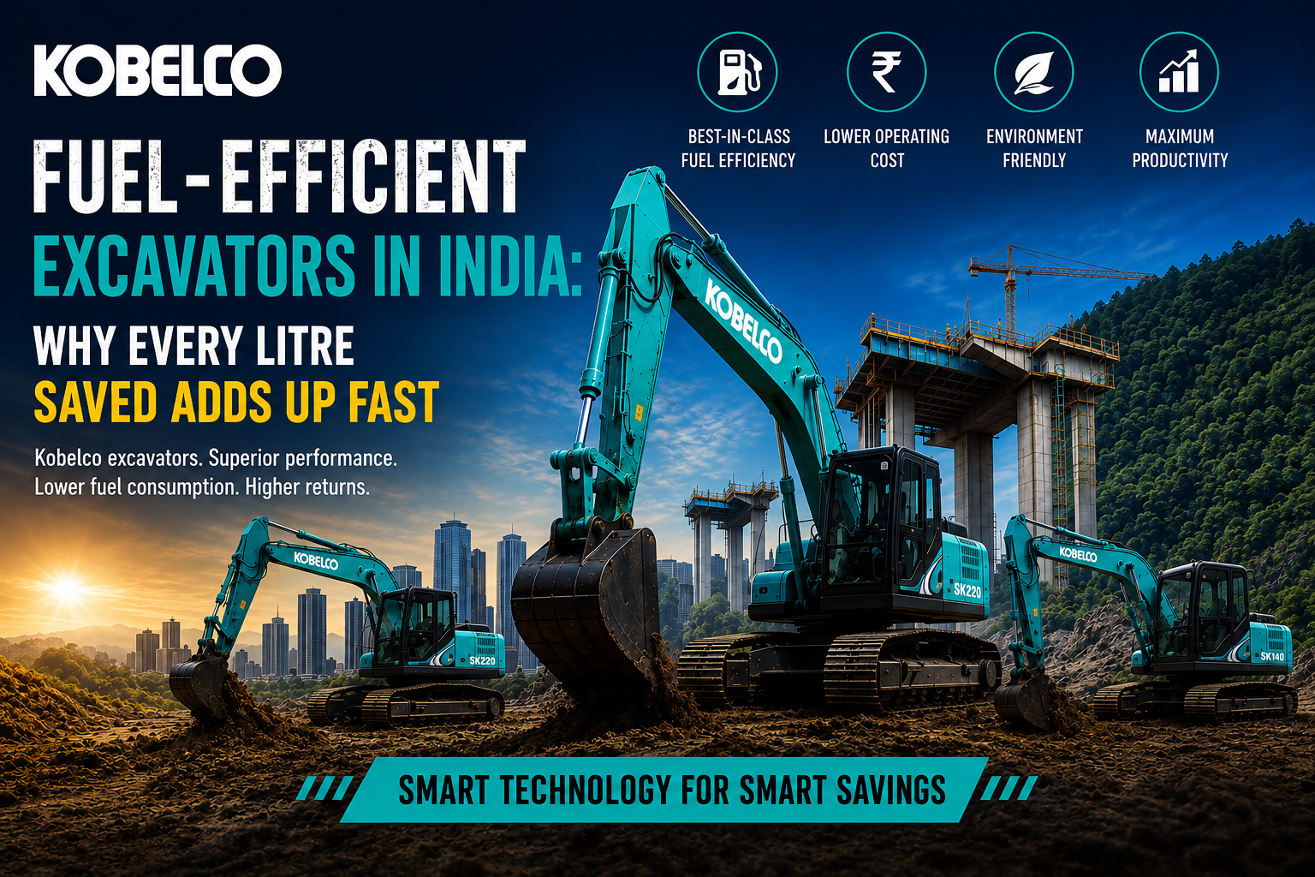
If you’ve ever sat down with a fleet owner and asked what keeps them up at night, fuel costs come up almost every time. It’s not glamorous to talk about, but it’s the single biggest recurring expense most contractors face once the machine is already on-site and working. This is exactly why the search for a fuel-efficient excavator in India isn’t a passing trend — it’s a genuine business decision that affects margins every single day. Fuel costs are a constant concern for Kobelco India’s contractors and fleet owners, often determining long-term project profitability. Think about it this way: an excavator running 8 to 10 hours a day, six days a week, burns through fuel constantly. Even a modest difference of a litre or two per hour between two machines translates into a substantial gap over a year — and an even bigger one across the full life of the equipment. For contractors running multiple machines across several sites, that difference can be the line between a profitable quarter and a break-even one. Multiply that across an entire fleet, and fuel efficiency stops being a minor spec-sheet detail and starts looking like one of the biggest financial levers a fleet owner actually controls.
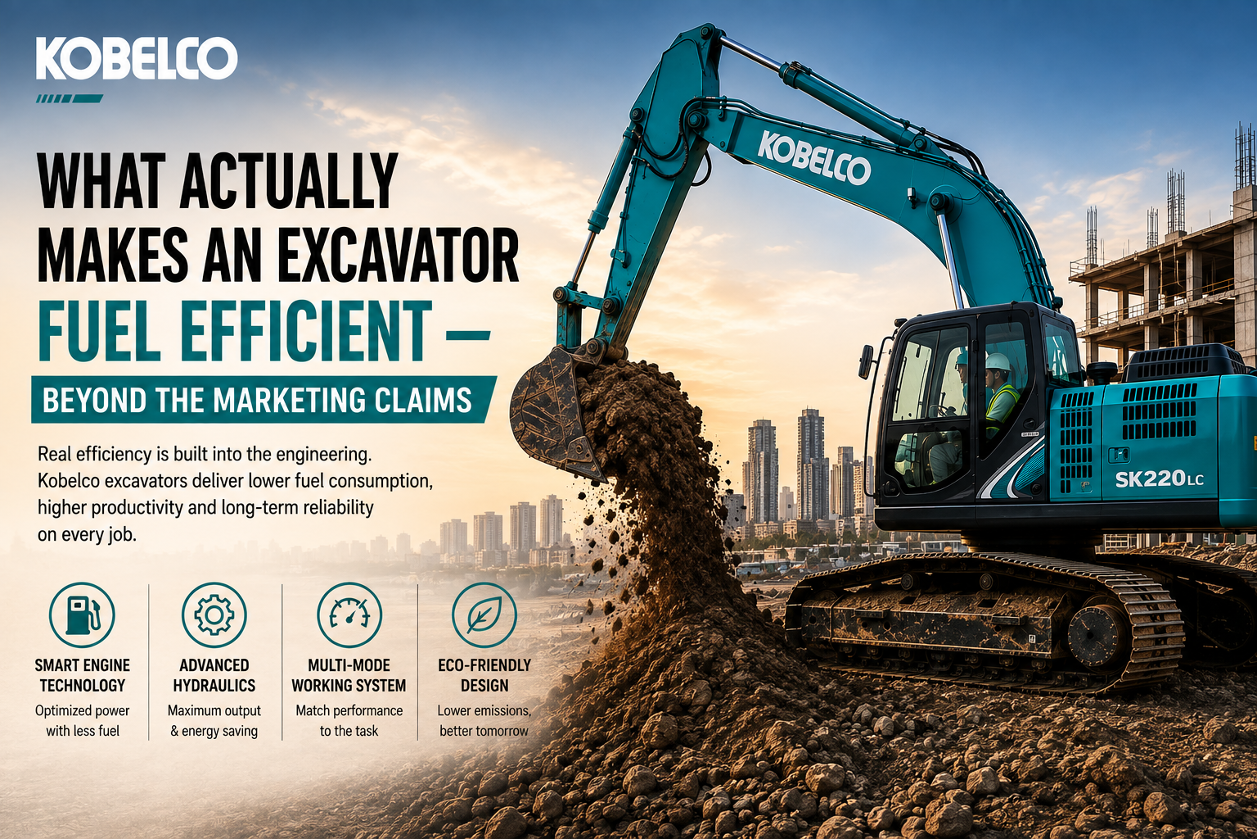
What Actually Makes an Excavator Fuel Efficient — Beyond the Marketing Claims
Fuel efficiency isn’t just about engine size or horsepower rating. It comes down to how intelligently the whole system — engine, hydraulics, and controls — works together. Two machines can carry identical engine specifications on paper and still perform very differently in the field, simply because of how well the surrounding systems are engineered.
Hydraulic pump and valve design plays a bigger role than most buyers realize. A well-designed hydraulic system loses less energy during digging and swing cycles, meaning the engine doesn’t have to work as hard to deliver the same digging force. Then there’s ECO-mode or power-mode selection, which lets an operator match engine output to the actual task at hand instead of running everything at full throttle regardless of load. Add auto-idle and idle-shutdown functions, which cut fuel waste during the inevitable pauses that happen on any job site, and you start to see how these smaller engineering choices compound into real savings over the course of a working day.
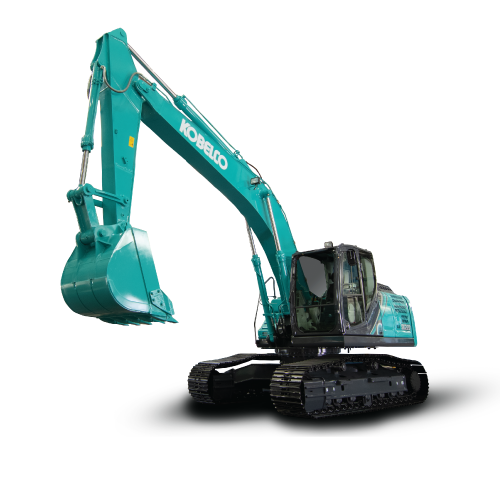
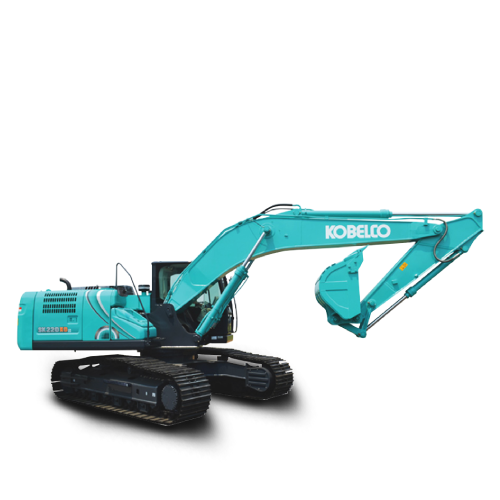
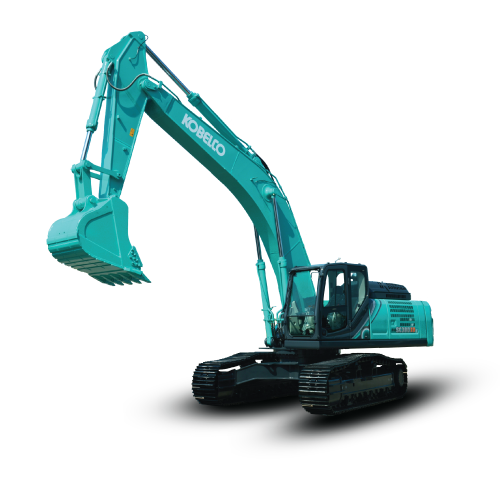
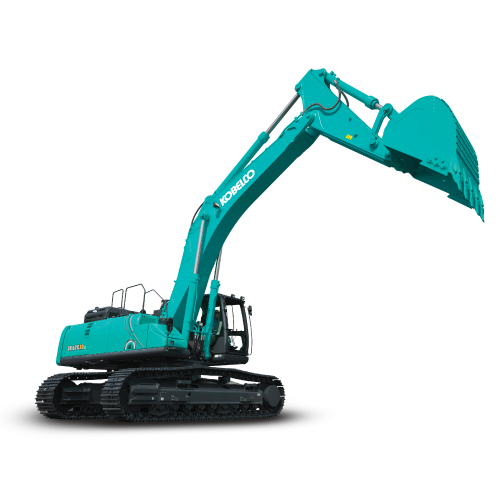
Kobelco India’s approach leans heavily on this kind of thinking. Kobelco excavators are built around ECO-mode operation alongside arm energy regeneration systems that recover and reuse hydraulic energy during repetitive digging motions, rather than letting it dissipate as wasted heat. It’s this combination — a hydraulic system engineered to conserve energy, paired with operator controls that give real flexibility over power output — that Kobelco India points to when contractors ask what actually separates a fuel-efficient machine from one that just claims to be.
Why Indian Operating Conditions Make This Even More Important
Diesel prices in India, combined with long working hours and high machine utilization across most fleets, mean the cost of fuel inefficiency hits harder here than in markets where machines run fewer hours per day. Add to that the reality that many Indian contractors operate on thin margins for competitive government and private tenders, and fuel savings stop being a “nice to have” and become central to whether a project stays profitable.
This is precisely why Kobelco India has built its excavator lineup with Indian working conditions in mind, rather than simply adapting machines designed for other markets. Long shifts, variable terrain, and continuous multi-site operation are the norm here, not the exception, and a machine that’s only efficient under laboratory conditions doesn’t hold up to that kind of daily reality.
An excavator with low fuel consumption doesn’t just save money on diesel bills — it lowers the cost per cubic metre of material moved, which is the number that ultimately determines whether a bid was priced correctly or not. For a contractor bidding on a competitive tender, that per-unit cost advantage can be the difference between winning the contract profitably and winning it at a loss.
Don't Just Trust the Brochure Number
Before finalizing a purchase, it's worth asking the dealer for actual field performance data, or better yet, talking to existing owners running the same model in similar conditions. A test run on your own site, if the dealer allows it, tells you more than any brochure ever will. Kobelco India's dealer network is generally open to arranging exactly this kind of on-site demonstration, since a machine that performs well on your specific terrain is a far stronger sales case than any printed specification.
The Long Game: Fuel Efficiency and Resale Value
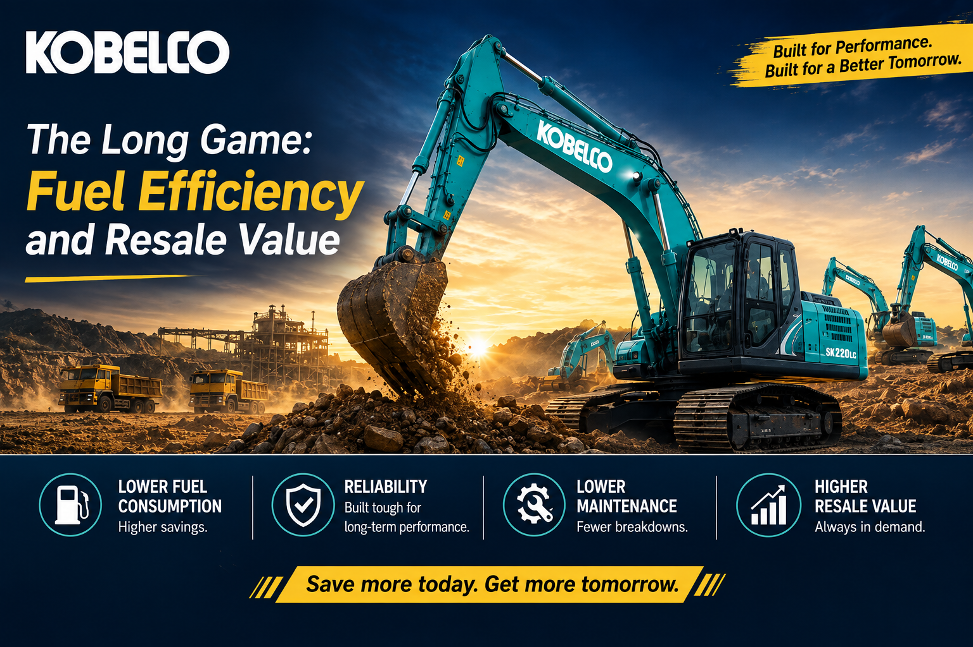
This matters more than it might seem at first glance. Equipment fleets in India are frequently bought, used for a few years, and then sold on to a second or third owner, so the reputation a machine builds for fuel economy over its working life directly shapes what it can be resold for later. Owners of Kobelco India excavators often cite this as one of the quieter financial benefits of choosing a fuel-efficient machine — it's not just about what you save while running it, but what you recover when it's time to move on.
Making the Decision
At the end of the day, choosing a fuel-efficient excavator isn’t about chasing the lowest number on a spec sheet — it’s about understanding how the hydraulic system, engine, and operating modes work together under your specific site conditions. Talking through your daily operating hours, terrain, and typical load cycles with Kobelco India or an authorized dealer will give you a far more realistic picture of expected fuel performance than any brochure comparison ever could.
Frequently Asked Questions
Not significantly for most tasks — ECO-mode is designed to match engine output to the load, so it reduces unnecessary fuel burn without meaningfully compromising performance on typical digging work.
It depends on daily operating hours and fuel prices, but even a small per-hour difference in consumption compounds significantly across a full year of heavy use.
Yes — wherever possible, request real-world field data or a site demonstration from Kobelco India or your local dealer rather than relying solely on published specifications.
Most modern systems are designed to activate only after a set period of inactivity, so it typically has minimal impact on day-to-day operation while still cutting wasted fuel.
Yes — machines with a strong reputation for low fuel consumption tend to hold their value better in the used equipment market, since buyers know what running costs to expect.